Posts Tagged ‘trinity’

Why Don’t Mormons Pray to Mary or Have Statues of Her?

Tuesday, April 21st, 2009

Mormons do not pray to Mary. Statues are art, and, as with any other form of art, might be found in an individual building or home, usually in a nativity setting.

There are several aspects of Mormon beliefs that must be understood before this question can beanswered. The first is that Mormon beliefs do not include the trinity. While they believe in God, Jesus, and in the Holy Ghost, they do not teach that they are the same being. They are three very distinct beings, wholly unified in purpose. For more on this, please read:

How Could Jesus Pray to Himself?

The second important point of Mormon doctrine is that we lived with God before we were born. God created our spirits and we lived with Him for a time before coming to earth.

Read more about this:

The Purpose of Life

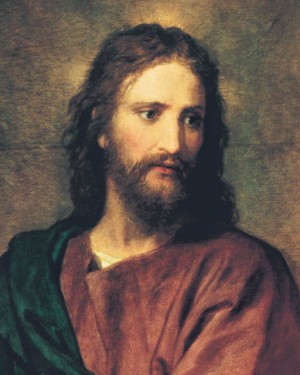
Jesus Christ MormonThese two teachings are important because they explain why we don’t feel we need to pray to Mary in order to get God’s attention. It is sometimes explained that if we’re in a noisy room, we will notice, despite the din, the voice of someone we know and love. This is why some people pray to Mary-because when billions are praying, Jesus will hear His mother’s voice. However, Mormons believe God can hear their voice anyway, because we are very literally His children and He loves us and knows us.

Toddlers are taught, in their very first church class, this little rhyme:

Heavenly Father knows me
And what I like to do.
He knows my name and where I live.
I know He loves me, too.

Mormons believe this, and believe God knows them and loves them enough to recognize and notice their voices, and that He can hear and answer every prayer, no matter how many are coming through at any one time. This is a part of His divinity.

Mormons pray to God through Jesus Christ. Jesus was given the role of Intercessor by God. When Jesus Christ offered the Intercessory Prayer, we saw how He was able to pray on our behalf to the Father.

Several scriptures in the Bible promote Jesus’ role as our advocate or intercessor, including Timothy’s explanation that there is only one mediator:

5 For there is one God, and one mediator between God and men, the man Christ Jesus; (1 Timothy 2)

Mary is very important in Mormon theology. Mormons believe she was chosen for her role as the mother of the Savior prior to her birth, and that her mission was foretold by prophets. Isaiah said, “14 Therefore the Lord himself shall give you a sign; Behold, a virgin shall conceive, and bear a son, and shall call his name Immanuel.” Isaiah 7:14

The Book of Mormon also foretells Mary. Both Lehi and his son Nephi, the first two Book of Mormon prophets, saw Mary in visions and knew she would be the mother of God’s only begotten Son.

“As there is only one Christ, so there is only one Mary. And as the Father chose the most noble and righteous of all his spirit sons to come into mortality as his Only Begotten in the flesh, so we may confidently conclude that he selected the most worthy and spiritually talented of all his spirit daughters to be the mortal mother of his Eternal Son.” (Bruce R. McConkie, Doctrinal New Testament Commentary, Bookcraft, Inc., 1965, vol. 1, p. 85.)

We know that Mary had lived a highly moral life in order to be allowed to carry out this great assignment. We can presume she was intelligent and her responses to her calling tell us she knew the scriptures well.

Jesus came to earth as a baby, not a grown man. He did not begin with a full knowledge of who He was or a complete memory of His life prior to His birth. It would have been Mary’s role to train Him in the ways of life and to help Him become the type of person who could and would carry out His eternally significant mission. We can, therefore, presume she was a wise and capable parent, and that she never lost sight of her role in God’s plan for the earth.

For these reasons, and because of the tremendous sacrifices she made and the suffering she endured as she witnessed the treatment and death of her firstborn Son, Mormons honor Mary.

She is often used as an example of a woman of faith, sacrifice, and obedience. In lessons on motherhood, she is usually the first example offered. Mormons look to her to show them the way to live their own lives, but their relationship with God is a direct one. Mormons pray to God, through Jesus. They don’t feel the need to ask someone else to intervene on their behalf, because they believe God loves them enough to hear them. While they might ask friends to pray for them, this does not replace praying to God themselves. Being prayed for by others helps us to connect to one another, but even if only one person prayed for himself, that pray would be heard and answered.

Some have asked if we have statues of Mary. Mormon chapels do not have artwork of any kind in the actual chapel where the service is held. The chapels are extremely simple and free of any decoration except for occasional flowers. However, the buildings-hallways, offices, and classrooms– do have paintings, and some have statues. The statues serve only as decoration and are not used in any way in the worship services. They serve only as teaching aids or reminders of important aspects of gospel teaching.

Art plays an important part in Mormon life as a tool for teaching. Teachers are encouraged to use it to help emphasize aspects of the story or principle being taught, to hold attention, or to invoke important thoughts or feelings. Mormons do not pray to statues or make use of them as part of their services, however. They are simply decorations or teaching tools. Statues of Mary are most often shown in context with her mission on earth as Jesus’ mother.

Do Mormons Believe in the Athanasius Creed?

Tuesday, March 24th, 2009

The Athanasian Creed was named after St. Athanasius, Archbishop of Alexandria. It was once believed to have been his work, but it no longer is, in part because it was written in Latin, and in part because it deals with controversies that didn’t arise until long after the fourth century, which is when Athanasius lived.

Mormon First VisionThe creed teaches the trinity of God, Jesus Christ, and the Holy Spirit. It also teaches that Jesus is one substance both with God and with Mary. The final section teaches, “They that have done good shall go into life everlasting: and they that have done evil into everlasting fire.”

This creed has often been controversial-the last section was fiercely debated in the nineteenth century in England-and is not used in the eastern church. It is seldom even used in the western church, having been dropped from the Catholic liturgy since Vatican II.

Mormons do not teach the Athanasius Creed. Because they are a restored church, and not a Protestant Church, they have not selected among Catholic doctrine or creeds. They don’t teach the trinity, although they do teach that how you live your earthly life will affect your eternal life.

Mormons teach that Jesus is the literal Son of God, just as is taught in the King James version of the Bible. In the King James version, people who believe in the Trinity often use the following scripture as proof of the teaching:

7 If ye had known me, ye should have known my Father also: and from henceforth ye know him, and have seen him.

8 Philip saith unto him, Lord, shew us the Father, and it sufficeth us.

9 Jesus saith unto him, Have I been so long time with you, and yet hast thou not known me, Philip? he that hath seen me hath seen the Father; and how sayest thou then, Shew us the Father?

10 Believest thou not that I am in the Father, and the Father in me? the words that I speak unto you I speak not of myself: but the Father that dwelleth in me, he doeth the works.

11 Believe me that I am in the Father, and the Father in me: or else believe me for the very works’ sake. (John 14)

A casual reading would suggest the trinity is indeed demonstrated in these verses. However, in verse 20, we’re shown the meaning of the statement that Jesus is in the Father. Verse twenty says:

20 At that day ye shall know that I am in my Father, and ye in me, and I in you.

This offers a different look at  the above verses. Mormons teach of the Godhead:

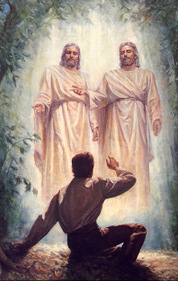
The true doctrine of the Godhead was lost in the apostasy that followed the Savior’s mortal ministry and the deaths of His Apostles. This doctrine began to be restored when 14-year-old Joseph Smith received his First Vision (see Joseph Smith—History 1:17). From the Prophet’s account of the First Vision and from his other teachings, we know that the members of the Godhead are three separate beings. The Father and the Son have tangible bodies of flesh and bones, and the Holy Ghost is a personage of spirit (see D&C 130:22).

Although the members of the Godhead are distinct beings with distinct roles, they are one in purpose and doctrine. They are perfectly united in bringing to pass Heavenly Father’s divine plan of salvation. (See LDS.org.)

In the verses above, Jesus is trying to help the apostles understand that He and His Father were completely unified. They had exactly the same values and the same mission. They taught the same truths. They were so much alike there was really very little difference between them. So the verses above were discussing a spiritual unity. Jesus then told his apostles He wanted them to be unified in the same way. He often warned them not to have disagreements. They should always be working towards a common goal-the salvation of men. When they were completely unified with each other and with the Savior, they would be unified with God and be able to most effectively carry out his plan.

The other part of the creed refers to how earthly behavior affects eternity. Mormons do teach that your choices on earth impact the rest of your life, including your life after death. If they didn’t, there would be no real purpose to life. God sent us here to be tested, and at the end of a test, there is a grade. Happily, God also provided ways for us to repent when we make mistakes, but we are expected to live according to God’s laws, as the Bible repeatedly warns us.

Not every one that saith unto me, Lord, Lord, shall enter into the kingdom of heaven; but he that doeth the will of my Father which is in heaven.” (Matthew 7:21, KJV of the Bible)

Most Christians teach that actions have no impact on us at all, but then state that a person must accept Jesus as their Savior-which, of course, is an act. The real question, apparently, is how many acts are required. Now, it’s true that acts alone aren’t enough. Acts don’t save us; faith does. The way we live our life is evidence of how strong our faith is. Jesus taught that faith without works is dead. It is never enough to say a certain set of words declaring our faith, and then rush off and live as we choose, instead of the way God chooses. To do so is to demonstrate that our faith is too weak to guide our actions.

On the other hand, all the good works in the world can’t save us. Only the atonement of Jesus Christ could save us, and works without faith are also dead. Our actions are our way of showing gratitude to Jesus Christ for His atonement. The greater our faith, the greater our good works and obedience will be. The two work in partnership to demonstrate to God the strength of our love and commitment to him.

What do Mormons believe about the Godhead?

Tuesday, January 15th, 2008

Members of the Godhead are united in purpose and will but consist of three separate Beings: God, the Eternal Father; Jesus Christ, His Son, our Redeemer; and the Holy Ghost. This view of the Godhead is based on ancient and modern revelation, and Mormons’ belief in the personal appearance of the Father and the Son to Joseph Smith in 1820.


Personal Response by Roger Keller

rkeller.jpg

The Latter-day Saint understanding of the Godhead and the nature of God are rooted in Joseph Smith’s first vision in which the Father and the Son appeared to Joseph standing side by side. The two members of the Godhead were clearly two separate, distinct personages. These two with the Holy Ghost, also an individual person of spirit, constitute the Godhead of Father, Son, and Holy Ghost. They are absolutely one in love, will, purpose, and direction. There is no variation among them, and to underline this unity, even though it is not an ontological unity, Latter-day Saints often define the doctrine of the Godhead as “Social Trinitarianism,” thereby underlining the indivisible unity of the three.

(more…)