
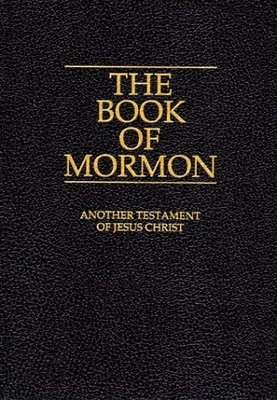
What is the Book of Mormon?
The Book of Mormon is a record of the Savior’s teachings to His “other sheep”–the ancient inhabitants of the Americas. it is a volume of scripture that God prepared for over a thousand years to come forth in our day, and it is a second witness, or testament, of Jesus Christ. It includes the spiritual history of the descendants of a prophet, Lehi, who lived at the time of Zedekiah’s rule in Jerusalem. Lehi was warned of God that Jerusalem would be destroyed, and was told to flee the land. The Book of Mormon includes a moving account of the Savior’s literal appearance on this continent after His resurrection. The record was translated by Joseph Smith through the gift and power of God. It stands as a second witness, with the Bible, of Christ’s love, divinity, sacrifice, and teachings.
Personal Response by Kent Brown

![]()
The Book of Mormon preserves records of three ancient peoples who came to the Americas and flourished. The high point of the book rests in the account of a three-day visit by the Risen Jesus Christ, a narrative that is unequaled in ancient literature. In the end, except for one group, all were destroyed by war.
Notably, Jesus Christ presses himself upon readers of the Book of Mormon from beginning to end. Most who spend time in the pages of the Book of Mormon come away with schooled impressions about Him and His wondrous work. For He forms the major focus of the book from its earliest pages. Nephi, the first author, pushes the Redeemer onto the stage both by narrating his own vision about the Messiah and by quoting his father’s words about the coming Redeemer. Moreover, Mormon, the chief compiler and editor of the work, shaped the final version of the record to bring the Redeemer into a clear light for readers. For instance, at the end of his own account, he writes poignantly about those who squandered their chance to come to Jesus:
O ye fair ones, how could ye have departed from the ways of the Lord!
O ye fair ones, how could ye have rejected that Jesus, who stood with open arms to receive you! (Mormon 6:17.)
The first pages of the Book of Mormon open onto a scene in Jerusalem about 597 BC, soon after King Zedekiah ascended the throne of the kingdom of Judah. A man named Lehi, called by God in a vision, joins other prophets in warning the city’s inhabitants of a pending disaster if they do not repent. But after hearing this message for thirty years from Jeremiah, people were not in a mood to respond warmly. Instead, many turned against Lehi, forcing him to flee with his family into Arabia. From there, his party makes its way to the New World. Thus begins the grand saga of the book, tracing many of the triumphs and hardships that descendants of this family experienced over a thousand-year history.
The Book of Mormon offers its own promise to those who read its pages “with real intent.” If a person will ask God “with a sincere heart” whether the book is true, God “will manifest the truth of it” to the earnest inquirer (Moroni 10:4).
Additional Resources:
S. Kent Brown, Voices from the Dust: Book of Mormon Insights (American Fork, Utah: Covenant Communications, 2004).
Personal Response by Karen Merkley

Recently, a sincere question posted on a Christian forum read, “Is the Book of Mormon a door to God?” I thought to myself, “Yes, in a way, it really is.” It opens our eyes to the Savior in much the same way as the Bible does. The Book of Mormon is advantaged in that it does not contain the errors induced by copyists and translators.
Some say, “Why do we need anything more than the Bible?” To them, I’d simply ask, “What’s unusual about an author, much less the Author of our faith, addressing us in more than one volume?” His relationship with us hasn’t ended, and neither have His revealed words.
I searched for a copy of the Book of Mormon in a number of libraries in Philadelphia, after having learned about it, ironically enough, through an Anti-Mormon brochure. Finally, I located one, and I took it home (with some ice cream), and stayed up most of the night reading it. I’d read literature from a number of denominations–from Swedenborgian to Christian Science–but I immediately recognized this book as the additional revelation that God intended for all of us to receive. I received a witness that it was true.
I’ve read and re-read the Book of Mormon, each time with a new understanding of my potential and God’s purposes. It keeps unfolding, kaleidoscopically. As I’ve plead for wisdom in my undertakings, and asked for guidance as a mother, as a friend, as professional, as a student, I have never wanted for an answer. Those answers have changed me, guided my steps, motivated me to overcome, helped me to balance justice and mercy, and brought me peace. It’s all there, tucked away in a true account of our forefathers and mothers. It’s a life-changing book, pre-dating our time but post-dated for our needs.
The Book of Mormon is about God’s power to deliver. It’s about the Savior’s ultimate reach, how far He will go to extend mercy and love to each of us in His family and how we can try to do likewise; it’s about God’s justice in allowing the consequences of sin to meet the ungodly if they persistently rebel against light and knowledge. It’s about the power of our personal faith and the perfection of that faith through adversity and struggle and growth. It’s an inspiring work that activates the power of faith in our lives and prepares us to see God.
I have to say that I’d be grateful if we just had certain portions of the Book of Mormon, like:
Alma 32: It’s a chapter that I refer to as the “Lord’s Formula for Success,” or the “Faith Version of the Scientific Experiment.” The Lord tells us how we can know what is “real” spiritually. It’s profoundly simple and simply profound.
1 Nephi 4: This chapter has been a template that I’ve overlaid in my life time and time again as I’ve encountered a new challenge, or taken a new direction, walking in faith. It is an absolute witness of the ways in which the Lord will guide us individually, according to our aptitudes, and help us move forward “not knowing beforehand the things which we should do.”
Alma 52: The physical war tactics described in this chapter are a type of spiritual war tactics. As I read this chapter, I’m reminded that I need to continue to defend my daughters from the voices which call housework and motherhood slavery, and which seek to “flatter them out of their strongholds,” overtaking them.
I’d be grateful to have been graced with just those passages, but even more so, having been given 531 pages of similar spiritual nuggets in the Book of Mormon.
I add my voice of testimony to the many who likewise testify, that the Book of Mormon is divine.
Additional Resources
Scriptural Witnesses: This article by a modern apostle, Elder Russell M. Nelson, illustrates that the scriptures of the Restoration do not compete with the Bible; they complement it.
The Cornerstones of Our Faith: This article by a living prophet, President Gordon B. Hinckley, addresses the 4 cornerstones of belief in The Church of Jesus Christ of Latter-day Saints.
Tags: Anti-Mormon, appearance of Jesus Christ, Book of Mormon, Faith, Jesus Christ, modern revelation
This entry was posted on Thursday, January 17th, 2008 at 11:16 am and is filed under Book of Mormon. You can follow any responses to this entry through the RSS 2.0 feed. You can leave a response, or trackback from your own site.

